
BJJ guideGi vs No-Gi BJJ: what's the difference?
Same art, two ways to train it. Here's how Gi and No-Gi Brazilian Jiu-Jitsu differ, and how to decide where to start.
At a glance
| Gi | No-Gi | |
|---|---|---|
| What you wear | A gi (kimono): heavy jacket, pants and belt | Rash guard and shorts or spats |
| Grips | Collar, sleeves, pants and belt | Wrists, neck, head and body only |
| Pace | Slower, more methodical | Faster and more scrambly |
| Techniques | Lapel chokes, sleeve and collar guards | More leg locks, wrestling and front headlocks |
| Carries over to | Self-defence against someone in clothes, judo | MMA, wrestling and submission grappling |
Training in the Gi
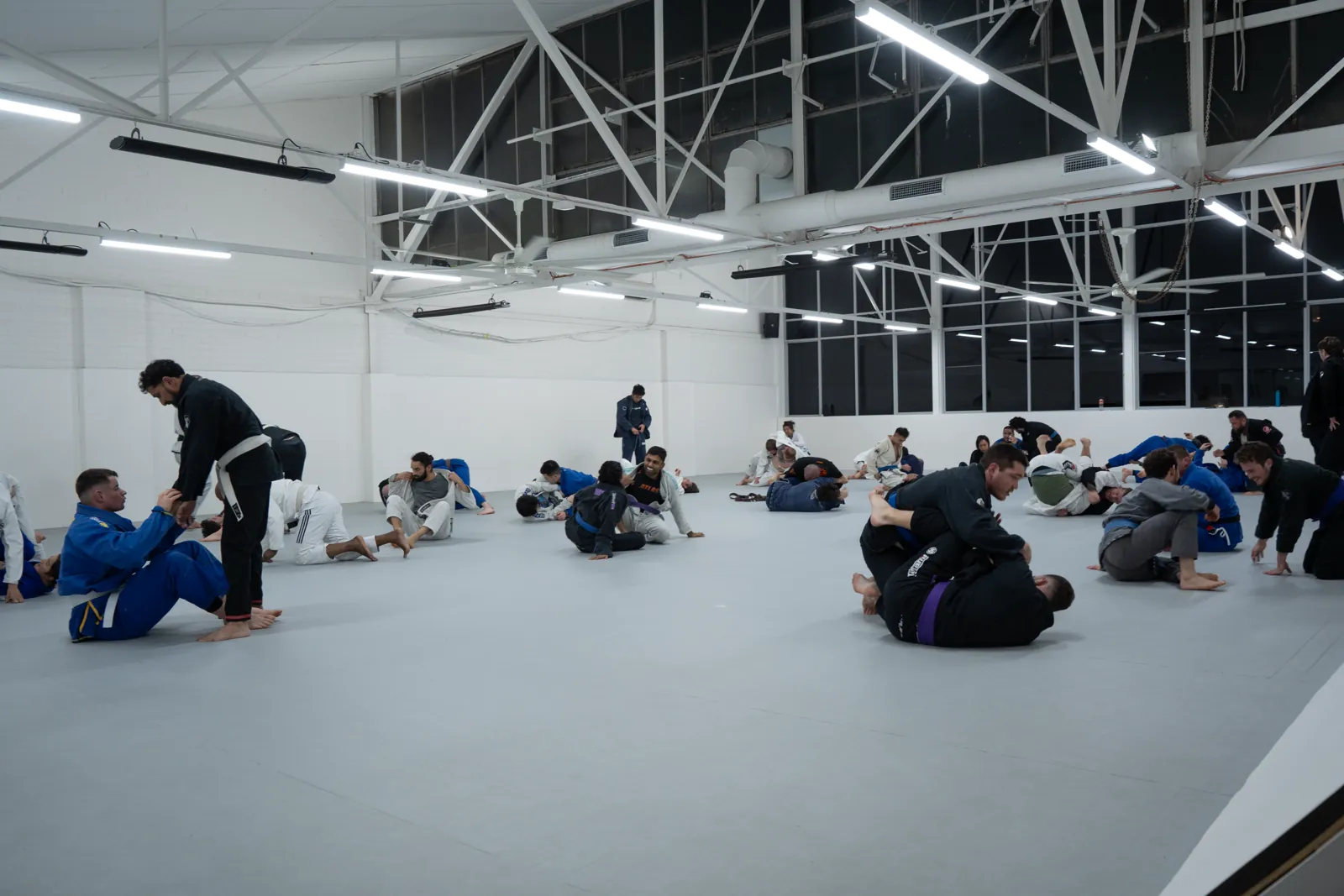
The gi is a heavy cotton uniform, similar to a judo uniform, designed to simulate everyday clothing and stand up to hard training. Being able to grip the collar, sleeves and pants opens up a huge range of techniques, from lapel chokes to sleeve and collar guards.
Those grips also create friction, which slows the game down. It's harder to escape and easier to hold someone, so the Gi rewards patience, precise grips and good technique. Many coaches see it as the best way to build strong fundamentals.
Training No-Gi
No-Gi is trained in a rash guard and shorts. With no clothing to grab, you control the body with underhooks, overhooks, wrist control and head control. Sweat and fewer grips make it faster and more athletic, with more scrambles and more wrestling.
Because there's no uniform, No-Gi carries over directly to MMA. It's also where leg locks and front headlock attacks feature most.
Which is better for self-defence?
Both work. The Gi teaches you to use and defend against clothing grips, which is realistic if someone grabs your jacket or shirt. No-Gi teaches you to control a body without relying on clothing, which is closer to MMA. The positions and escapes at the heart of BJJ are the same in both.
Which should I start with?
Pick the class time that suits you. Turning up consistently matters far more than which version you start with. If you're interested in MMA, No-Gi carries over more directly. If you love technical detail, you'll probably enjoy the Gi. Most members end up training both, and each makes you better at the other.
No-Gi needs no special uniform, so it's an easy way to try your first class. Our guide to your first BJJ class covers what to expect.
Gi and No-Gi at Absolute MMA
Gi and No-Gi classes run at Melbourne CBD and St Kilda, and Collingwood runs No-Gi BJJ. Kids' BJJ at St Kilda includes both Gi and No-Gi classes. See the BJJ class page for times at each club.
Common questions
Do I need to buy a gi to start?
Not to start. Try a No-Gi class in shorts and a rash guard, or ask the team about a gi when you book a Gi class.
Is No-Gi harder than Gi?
Neither is harder. They're different. No-Gi is faster and more athletic; the Gi is slower and has more grips and techniques to learn.
Which clubs teach Gi BJJ?
Gi classes run at Melbourne CBD and St Kilda. Collingwood runs No-Gi BJJ.
Start training